
Hindu Festival Guide
Ganesh Chaturthi: Date, Significance, Puja Vidhi & History
Learn why Ganesh Chaturthi is celebrated, how families perform Ganesh Puja, what is included in the Puja Samagri, and how the festival is observed across India.
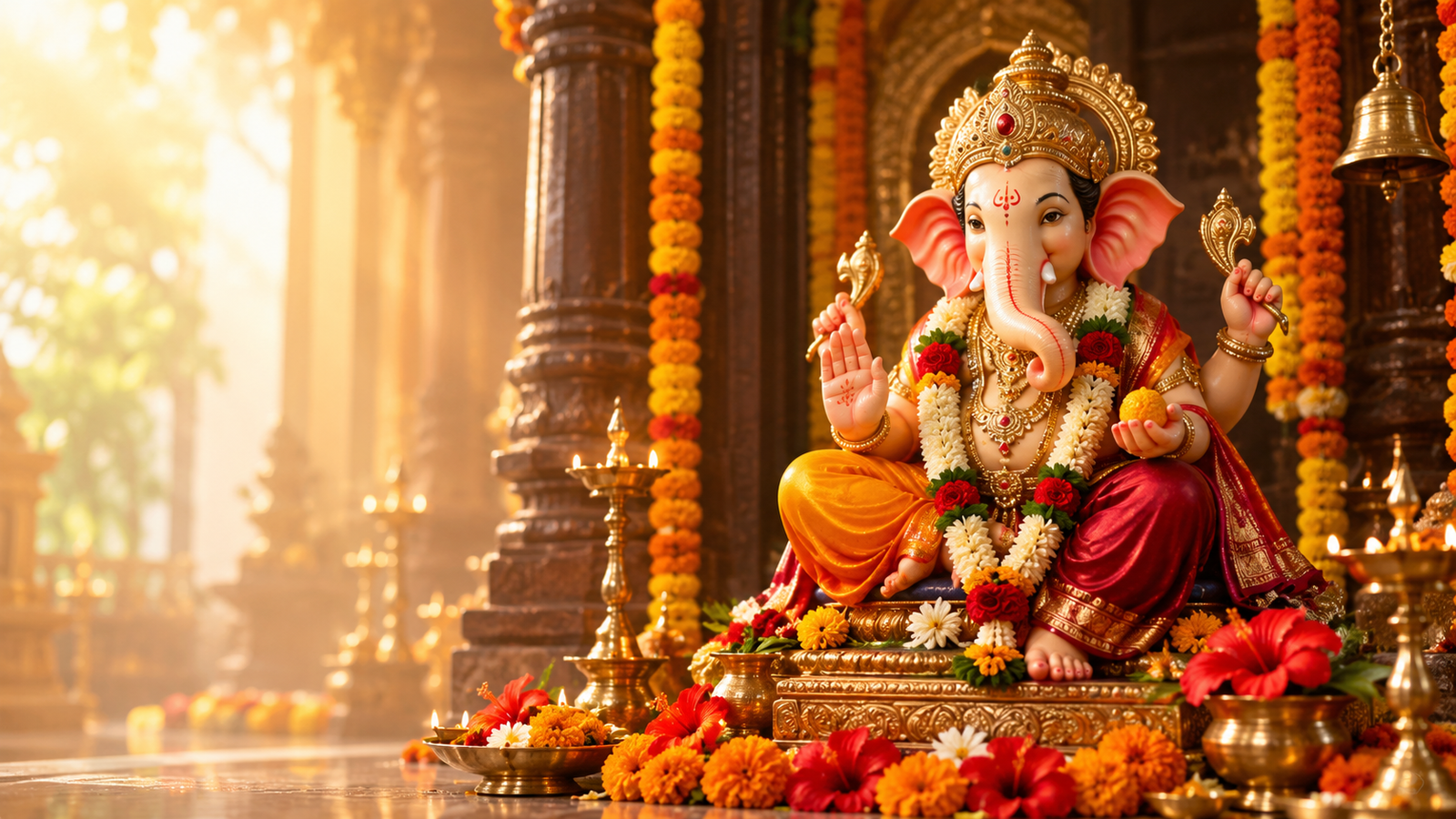
Ganesh Chaturthi is a Hindu festival that celebrates the birth of Lord Ganesha, the elephant-headed deity worshipped as the remover of obstacles and the giver of wisdom. It is observed on the Chaturthi Tithi, or fourth lunar day, of Shukla Paksha in the Hindu month of Bhadrapada. Families welcome a Ganesha idol into their homes, offer prayers and sweets, and spend time together in devotion. In many towns and cities, neighbourhoods also organise public celebrations with decorated pandals, music and community activities.
The festival is known by different names, including Ganeshotsav, Vinayaka Chaturthi and Vinayaka Chavithi. The way it is celebrated varies from one family and region to another, but the central feeling is the same: welcoming Lord Ganesha with faith and asking for guidance, clarity and strength for the days ahead.
Ganesh Chaturthi Date: When Is It Celebrated?
Ganesh Chaturthi does not fall on the same Gregorian calendar date every year. It is observed on Bhadrapada Shukla Chaturthi—the fourth lunar day (Chaturthi Tithi) during the bright fortnight (Shukla Paksha) of the Hindu month of Bhadrapada. In the Gregorian calendar, the festival generally falls in August or September.
The date is determined through the Hindu lunar calendar. The Chaturthi Tithi may begin on one evening or morning and end on the following civil date. For that reason, the festival date is not decided simply by checking which date contains the start of the Tithi. Traditional Panchang rules consider when Chaturthi prevails during the local Madhyahna period (midday), along with the relevant calendrical conditions.
Ganesh Chaturthi Tithi and Panchang Details
A Panchang gives more than the festival date. It records the lunar day and other time-based elements used in Hindu calendrical traditions. The table below explains which details to check for your location; the values must be taken from the Panchang for the specific year and city.
| Panchang detail | What it means |
|---|---|
| Festival date | The Gregorian calendar date selected for the local observance; it changes each year. |
| Hindu month and Paksha | Bhadrapada month, Shukla Paksha (the waxing or bright half of the lunar month). |
| Chaturthi Tithi | The local start and end times of the fourth lunar day. A Tithi can cross midnight or span two civil dates. |
| Madhyahna Puja Muhurat | The location-specific midday window traditionally preferred for Ganesh Puja. |
| Nakshatra | The lunar mansion prevailing at a given time; it can change during the day. |
| Yoga and Karana | Other Panchang elements calculated from the Sun's and Moon's positions; their periods vary. |
| Sunrise and sunset | Local solar timings used in many Hindu calendar calculations. |
| Moonrise and Moon-sighting period | Local lunar timings, especially relevant to traditions about Chandra Darshan on this day. |
Why does location matter? Sunrise, sunset, the local midday period and the timing of the Tithi can differ between cities. A date or Muhurat displayed for one city should not automatically be used for another. When checking a Panchang, select your city first and read the date, Tithi and Muhurat together.
For Ganesh Sthapana and worship, many traditions give importance to the Madhyahna period. Follow the guidance of your local Panchang, temple or family tradition rather than relying on a generic time copied from another location.
What Is Ganesh Chaturthi?
Ganesh Chaturthi marks the birth or appearance of Lord Ganesha, who is widely worshipped across Hindu traditions. The word Chaturthi refers to the fourth lunar day. The festival's name therefore connects the worship of Ganesha with the fourth Tithi of the bright lunar fortnight in Bhadrapada.
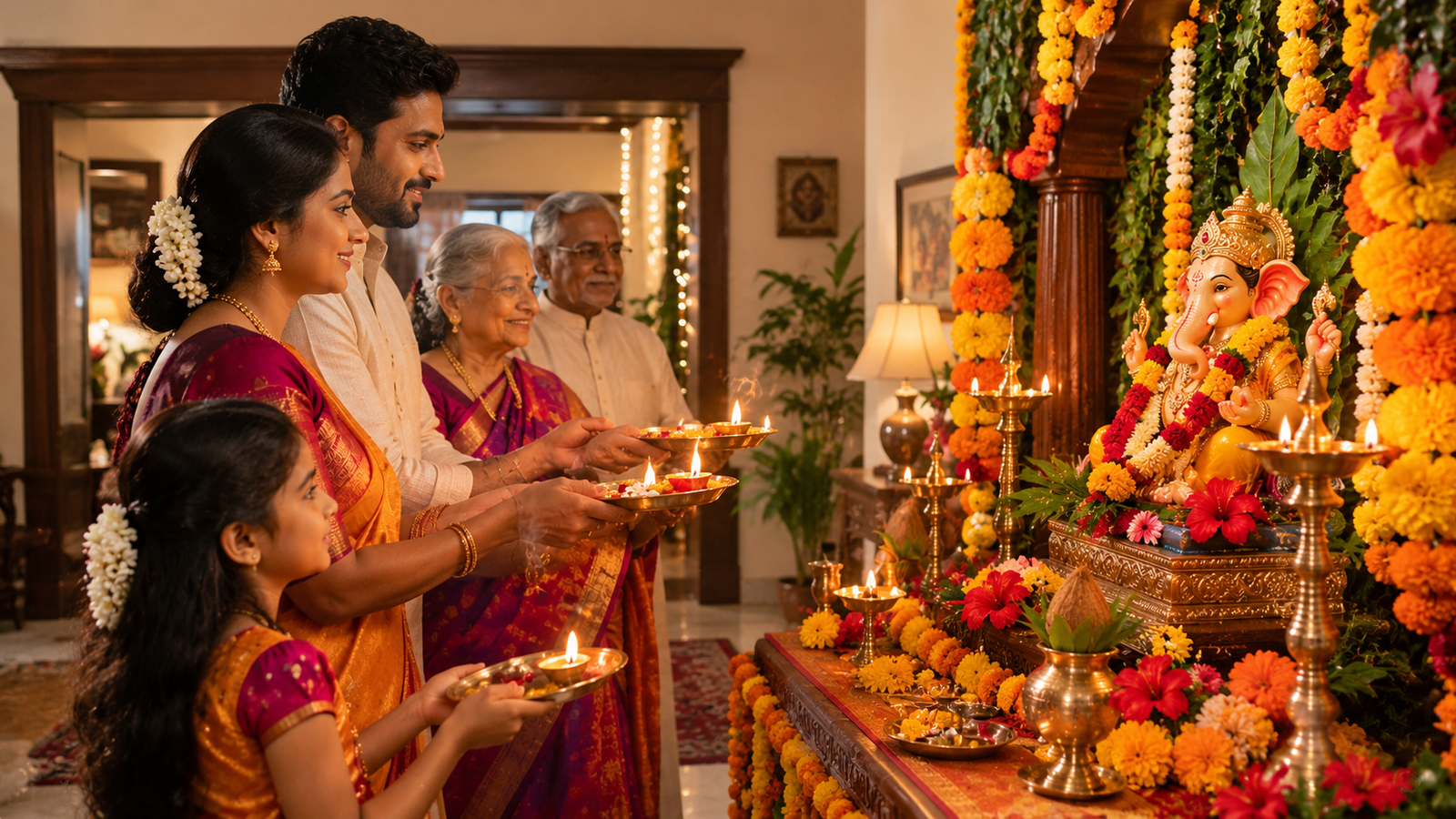
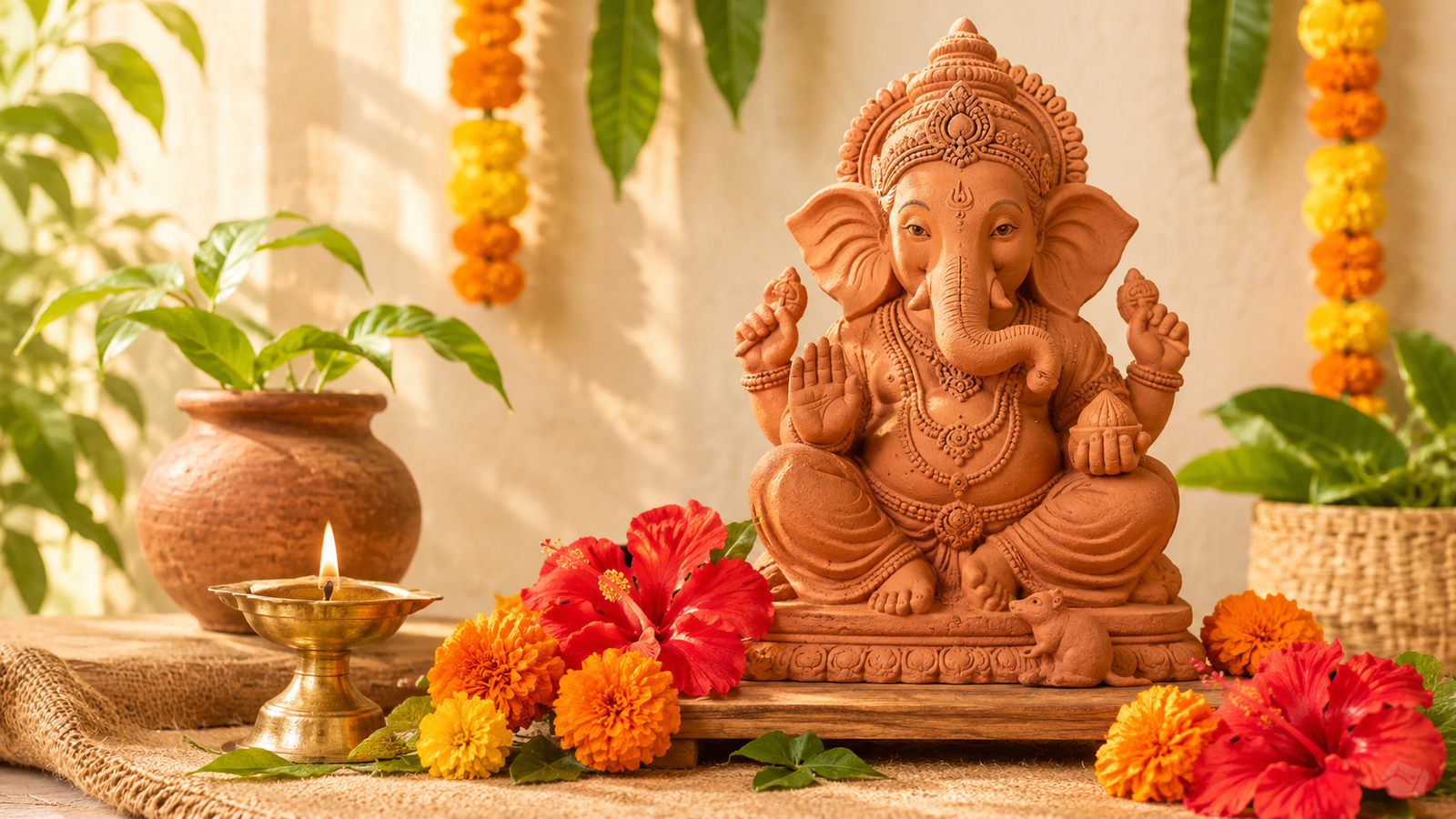
Many families bring a clay or other traditionally made idol home for a chosen period. They decorate a small place of worship, perform prayers, offer flowers and food, and sing or listen to Aarti. Community groups may install larger idols in temporary pandals, where visitors gather for worship and cultural programmes.
Ganesh Chaturthi is also called Vinayaka Chaturthi in several parts of India. The monthly Vinayaka Chaturthi observed in other lunar months is a separate recurring observance; the Bhadrapada Shukla Chaturthi is the major annual festival commonly called Ganesh Chaturthi.
History and Origin of Ganesh Chaturthi
The traditional story of Lord Ganesha's birth
Hindu traditions tell several versions of Lord Ganesha's origin. In a widely told account, Goddess Parvati created a boy from the paste or substance used while preparing for her bath and asked him to guard the entrance. When Lord Shiva returned, the boy did not recognise him and stopped him from entering. A conflict followed, and the boy lost his head. To console Parvati and restore the child, Shiva arranged for an elephant's head to be placed on the boy's body. He was then blessed and honoured as Ganesha, the leader of the ganas.
Different Puranic tellings and family traditions present details of this story in different ways. The story is shared as a sacred account within Hindu tradition, rather than as a modern historical event.
From household worship to public Ganeshotsav
Worship of Lord Ganesha and seasonal celebrations existed long before the modern public festival. Historical accounts connect organised celebrations in Maharashtra with the Maratha and Peshwa periods. In the late nineteenth century, Lokmanya Bal Gangadhar Tilak helped expand Ganesh Chaturthi into a large public celebration. In 1893, he encouraged community worship and public gatherings at a time when the freedom movement was seeking ways to bring people together under colonial rule.
Public pandals, cultural performances, speeches, music and neighbourhood participation gradually became important parts of the festival. Today, private family worship and large public celebrations continue side by side.
Religious and Spiritual Significance of Ganesh Chaturthi
Lord Ganesha is often called Vighnaharta, the remover of obstacles, and Pratham Pujya, the one honoured first in many Hindu rituals. Devotees pray to him before beginning a new task, starting a business, entering a home, or setting out on a new learning journey. The prayer expresses a wish for clear thinking, patience and a steady beginning.
His elephant head is commonly understood as a symbol of wisdom and thoughtful strength. His large ears are often interpreted as a reminder to listen carefully, while his calm presence encourages patience. These are devotional interpretations of the form, and meanings can differ between teachers and traditions.
For many families, the festival is also a time to welcome relatives, share food, support local artisans and help neighbours. The rituals are important, but the values behind them—humility, discipline, learning and generosity—are equally meaningful.
Why Is Ganesh Chaturthi Celebrated for Several Days?
Ganeshotsav is often described as a 10-day festival. The first day begins with Ganesh Sthapana, when the idol is ceremonially welcomed and worship begins. Families then perform daily Puja and Aarti, offer Naivedya, and invite friends or relatives to share in the celebration.
The duration is not identical in every home. Some families perform Visarjan after one and a half days, while others choose the third, fifth, seventh or eleventh day according to family custom. Public mandals commonly continue their celebrations through the festival period and hold a major farewell procession for Anant Chaturdashi.
Anant Chaturdashi is the fourteenth lunar day of the bright fortnight and is an important day for Ganesh Visarjan in many communities. The public celebration is commonly described as a ten-day Ganeshotsav, while household observances may end earlier. Counting conventions can vary, so it is more useful to follow the local calendar and the family or mandal tradition.
Ganesh Chaturthi Puja Vidhi: A Simple Step-by-Step Guide
The details of Ganesh Puja vary by region, priestly tradition and family custom. The steps below are a simple overview for readers who want to understand a home celebration. Families following a specific paddhati should use their own Puja instructions.
- Clean the worship area: Tidy the place where the idol will be installed. Prepare a clean platform and decorate it with a cloth, flowers or rangoli.
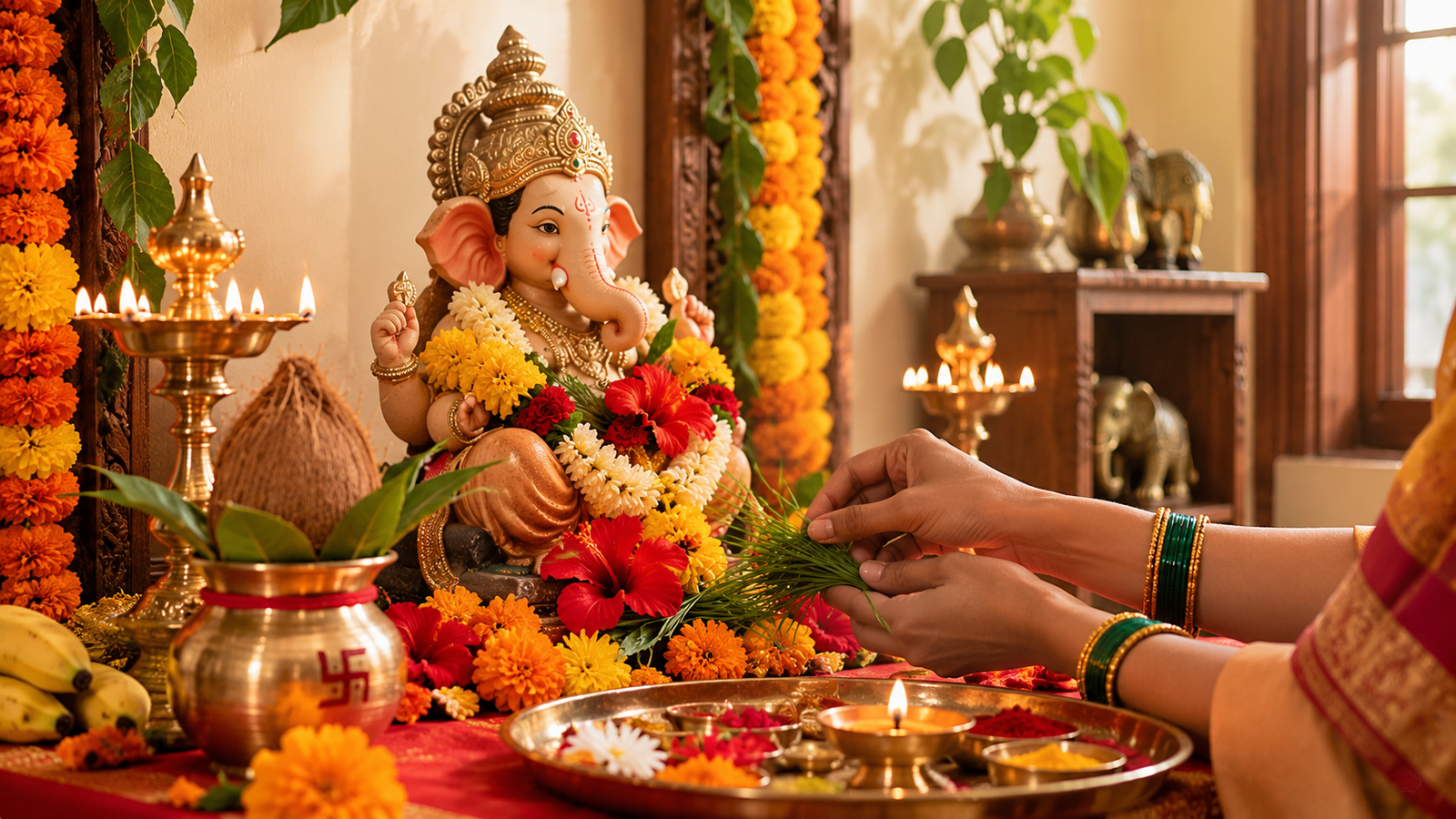
- Prepare the idol and offerings: Place the Ganesha murti securely on the platform. Keep the Puja items, water, flowers, Durva grass, sweets and Aarti plate nearby.
- Light a Diya and make a Sankalp: Light the lamp and take a quiet moment to state the intention of the Puja. Sankalp is the devotee's statement of purpose and commitment.
- Perform Avahana: Avahana means inviting the deity. During a new festival installation, the family or priest performs the invocation according to its tradition.
- Complete Sthapana or Prana Pratishtha as guided: A formal installation may include Prana Pratishtha, a consecration ritual performed with mantras. This is usually guided by a priest or the family's established practice.
- Offer water and traditional items: Where prescribed, offer water for the symbolic welcome and other upacharas. A detailed sixteen-step worship is known as Shodashopachara Puja.
- Offer Chandan, Kumkum and Akshata: Apply sandalwood paste or a tilak as customary, and offer Akshata, which is unbroken rice often mixed with turmeric or kumkum.
- Offer flowers and Durva grass: Place fresh flowers and Durva before the idol. Red flowers, including hibiscus, are common in many homes, though offerings differ by family tradition.
- Offer Modak and Naivedya: Place Modak, fruits and other prepared foods before Lord Ganesha as Naivedya, the food offering.
- Perform Dhoop, lamp and Aarti: Offer incense and light, then sing or recite a familiar Ganesh Aarti with devotion.
- Pray and distribute Prasad: Offer a final prayer, bow respectfully and share the blessed food with family and visitors.
Some traditional procedures include more detailed offerings and mantras. If the idol is a permanent murti already worshipped at home, the installation and farewell procedures may not be the same as those used for a temporary Ganesh Chaturthi murti.
Ganesh Chaturthi Puja Samagri List
The exact Puja Samagri list depends on the ritual and local custom. Use this checklist as a preparation aid, not as a rule that every item is compulsory. Tick the items you have arranged.
This checklist works on the current page only. Your selections are not saved to an account or sent anywhere.
Ganesh Chaturthi Vrat Rules
Some devotees observe a fast on Ganesh Chaturthi as an expression of devotion and self-discipline. Fasting practices are not the same in every household. Some people avoid grains for the day, some eat fruit and milk, and others follow a simple vegetarian meal after Puja. A person may also choose prayer and a mindful routine without undertaking a food fast.
- Decide your fasting practice in advance according to your family's custom.
- Keep drinking water unless your own religious or medical guidance says otherwise.
- Choose foods that are part of your usual fasting tradition, such as fruit, milk, nuts or permitted vrat foods.
- Spend time in prayer, mantra recitation or reading a devotional text.
- End the fast according to your family's practice and local Puja guidance.
Fasting is a personal religious observance, not a requirement for every devotee. Children, older adults, pregnant people and anyone with a health condition should not put their wellbeing at risk to follow a fast; they can choose a form of worship that is suitable for them.
Ganesh Chaturthi Mantras
Devotees recite different mantras according to their family tradition, language and level of familiarity with Sanskrit. Two widely recited options are given below. Pronunciation can be learned from a trusted teacher or priest.
Vakratunda Mahakaya Mantra
श्री वक्रतुण्ड महाकाय सूर्य कोटि समप्रभा।
निर्विघ्नं कुरु मे देव सर्वकार्येषु सर्वदा॥
Shri Vakratunda Mahakaya Suryakoti Samaprabha, Nirvighnam Kuru Me Deva Sarva-Karyeshu Sarvada.
Simple meaning: O Lord with the curved trunk and great form, whose radiance is like millions of suns, please help remove obstacles from my work, always.
Ganesh Ashtakshara Mantra
ॐ गं गणपतये नमः॥
Om Gam Ganapataye Namah.
Simple meaning: Salutations to Lord Ganapati. Devotees chant this short mantra as a prayer for guidance and blessings.
Mantra recitation is usually done with attention and respect rather than speed. Even a short prayer offered sincerely can be meaningful to the person praying.
Why Is the Moon Not Viewed on Ganesh Chaturthi?
A traditional belief advises devotees not to look at the Moon on Bhadrapada Shukla Chaturthi. The custom is associated with the story of the Syamantaka Mani. In the Puranic account, Lord Krishna was wrongly accused of taking the precious jewel. Sage Narada connected the false accusation with Krishna having seen the Moon on Ganesh Chaturthi and explained the belief about Mithya Dosha, or the blemish of a false accusation.
The story is why some families avoid Chandra Darshan during the specified period. It is a religious tradition, not a reason to frighten people. Practices for what to do after an accidental sighting differ; devotees may follow the prayer or remedial practice taught in their own tradition.
Ganesh Visarjan and Anant Chaturdashi
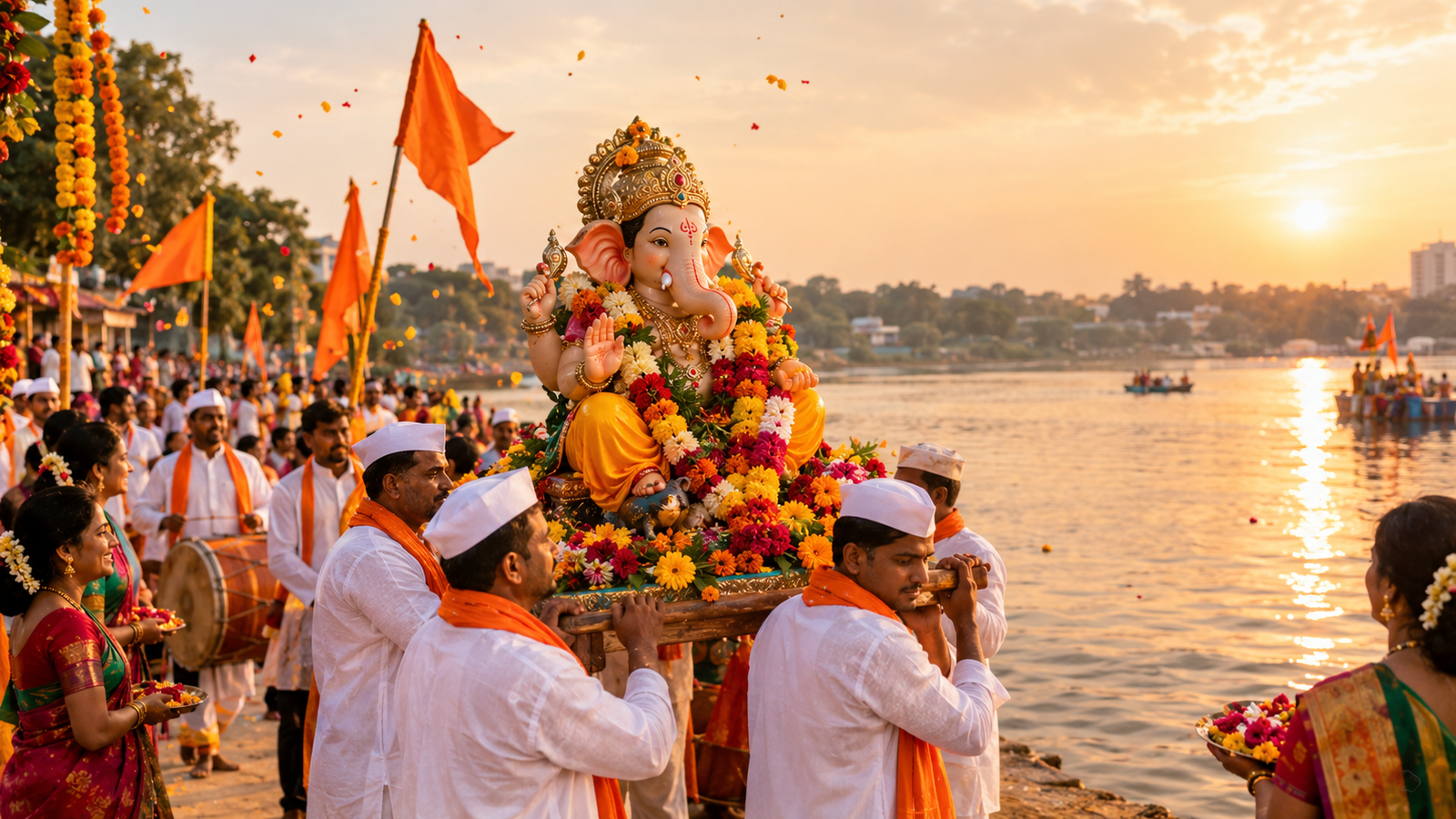
Visarjan means immersion. At the end of the family's chosen celebration period, devotees perform a farewell Puja, offer flowers and Naivedya, and respectfully take the festival idol for immersion. In a traditional procession, people sing devotional songs and chant “Ganpati Bappa Morya” as they accompany the murti.
The immersion has a symbolic meaning. The idol, often made from clay, returns to the elements from which it came. For devotees, the farewell also expresses the belief that Lord Ganesha returns to his divine abode and will be welcomed again. Families may choose same-day, one-and-a-half-day, third-day, fifth-day, seventh-day or Anant Chaturdashi Visarjan according to their custom.
Anant Chaturdashi, the fourteenth lunar day of Shukla Paksha, is an important Visarjan day for many public mandals and families. Its Gregorian date and Tithi timings change each year, so devotees should check their local Panchang for the relevant observance.
How Is Ganesh Chaturthi Celebrated Across India?
The festival is observed in many parts of India, but its local names, foods, music and household customs are not identical. These are broad examples rather than rules for every family in a state.
Maharashtra
In Maharashtra, the celebration is widely known as Ganeshotsav. Families welcome home idols, while public mandals create decorated pandals and organise Aarti, cultural programmes and community gatherings. Dhol-Tasha performances and the chant “Ganpati Bappa Morya” are familiar parts of many public celebrations.
Goa
In Goa, the festival is commonly called Chavath. Household worship and family gatherings are important, and local food traditions include sweets such as Nevri alongside Modak. The form of the celebration can differ from village to village and between families.
Karnataka
In Karnataka, Gowri Habba is observed in many communities before Ganesh Chaturthi. Families worship Ganesha at home and prepare regional offerings. Kadubu and other local foods may be part of the festive meal.
Andhra Pradesh and Telangana
The festival is also known as Vinayaka Chavithi in Telugu-speaking areas. Families install idols at home and in public spaces, perform Puja and offer traditional foods. Large community pandals and public celebrations are especially visible in cities.
Tamil Nadu
In Tamil Nadu, the day is often called Vinayagar Chaturthi. Families worship Vinayagar and prepare offerings such as Kozhukattai, a steamed rice-flour dumpling with a sweet filling.
Gujarat
Devotees in Gujarat also celebrate Ganesh Chaturthi with home worship, temple visits and community events. The scale and style of public celebrations vary by city and neighbourhood.
Other regions
Ganesh Chaturthi is also observed in Madhya Pradesh, Rajasthan, Uttar Pradesh, Kerala, Odisha, West Bengal, Assam and other parts of the country. Local calendars, names and offerings reflect each region's own cultural practices.
How to Celebrate an Eco-Friendly Ganesh Chaturthi
A thoughtful celebration can honour tradition while taking care of local water bodies and public spaces. A few practical choices can reduce waste without taking away the joy of the festival.
- Choose a natural clay idol: Consider a small, unpainted or naturally coloured clay murti made by a local artisan.
- Use reusable decorations: Cloth, flowers, leaves and decorations that can be stored for next year create less waste than single-use plastic.
- Avoid harmful paints and materials: Ask the artisan about the materials used, and avoid glitter, plastic accessories and paints that may contaminate water.
- Use approved immersion facilities: Follow local authority guidance and use designated tanks or collection points where they are provided.
- Keep offerings out of drains: Collect flowers, plastic packaging and other waste separately. Compost suitable organic material where facilities allow.
- Celebrate with consideration: Keep sound levels and event timings considerate of neighbours, children, older adults and animals.
- Support community work: Some groups include cleanliness drives, tree planting, donation activities or other local service projects in their celebrations.
Check municipal instructions for your area before immersion. Environmental rules and approved arrangements can differ from one city to another.
Traditional Foods and Prasad for Ganesh Chaturthi
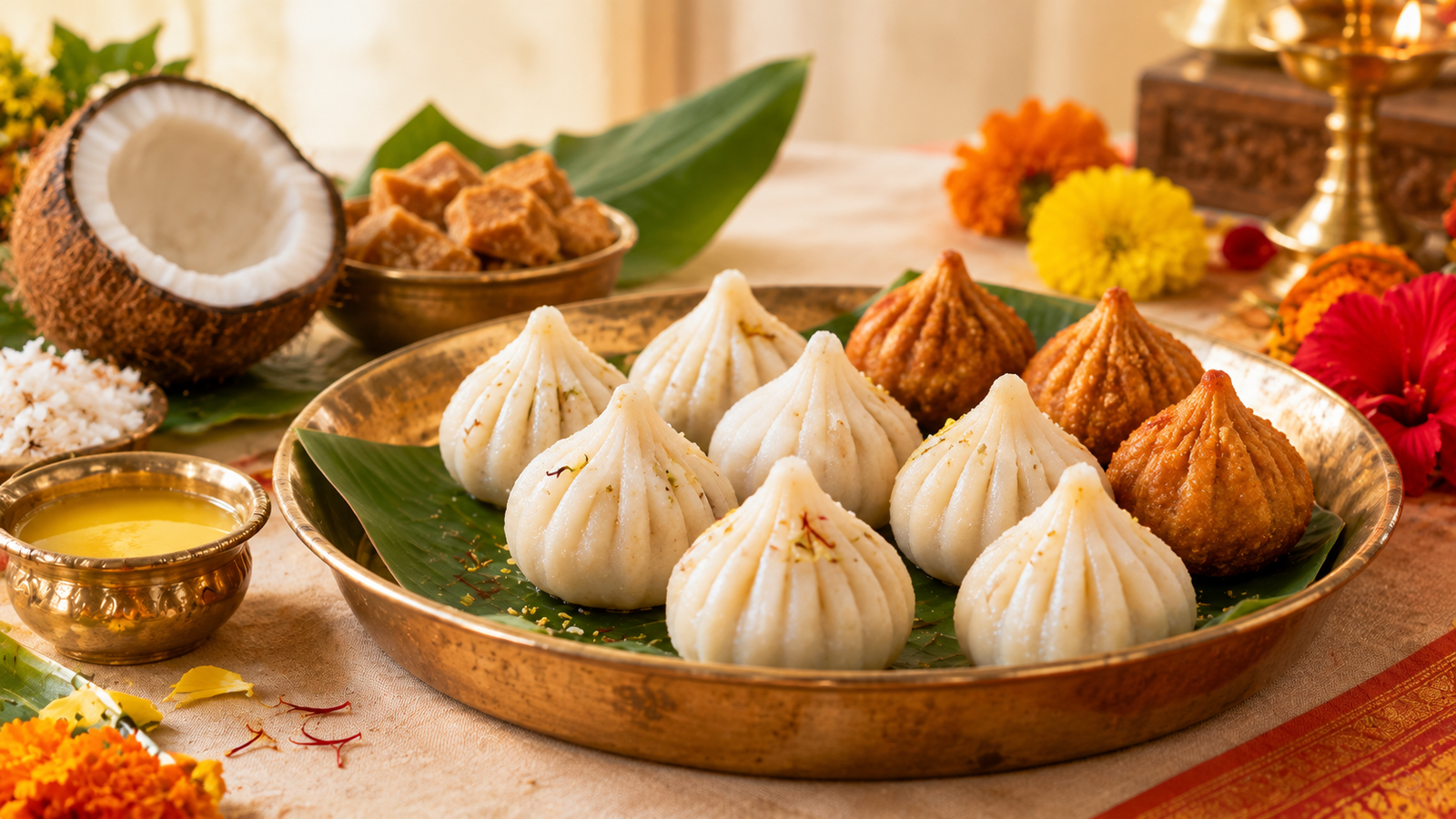
Food is an important part of the festival, and the dishes offered to Lord Ganesha change with regional cooking traditions. Modak is among the best-known offerings and is popularly associated with Ganesha.
Modak and Ukadiche Modak
Modak is a sweet dumpling commonly filled with coconut and jaggery. Ukadiche Modak is a steamed Maharashtrian version made with a rice-flour outer layer. Fried versions and other regional variations are also prepared.
Ladoo and other sweets
Ladoo, coconut-based sweets and other homemade treats may be included in the Naivedya. The choice depends on family custom and the food culture of the region.
Puran Poli and regional offerings
Some Maharashtrian homes prepare Puran Poli as part of the festive meal. In different regions, devotees may offer Kadubu, Kozhukattai, Nevri, Vundrallu or other local preparations. These dishes show how the same festival is celebrated through many food traditions.
Naivedya is offered respectfully and later shared as Prasad. The value is in devotion and sharing, not in preparing an elaborate menu.
Frequently Asked Questions About Ganesh Chaturthi
1. When is Ganesh Chaturthi celebrated?
Ganesh Chaturthi is observed on Bhadrapada Shukla Chaturthi. Its Gregorian date changes every year, so check the Panchang for the required year and city.
2. Why is Ganesh Chaturthi celebrated?
It celebrates the birth or appearance of Lord Ganesha. Devotees worship him for wisdom, guidance and the removal of obstacles.
3. How many days is Ganesh Chaturthi celebrated?
Ganeshotsav is commonly described as a 10-day festival, but household observances vary. Some families perform Visarjan after one and a half, three, five or seven days, while others observe it on Anant Chaturdashi.
4. Why is Lord Ganesha worshipped first?
Many Hindu traditions honour Ganesha as Pratham Pujya, meaning the deity worshipped first. Devotees seek his blessings before beginning important work or religious ceremonies.
5. What is the significance of Modak?
Modak is a traditional sweet offering associated with Lord Ganesha. It is prepared in several regional styles, including steamed and fried versions.
6. Which flowers are offered to Lord Ganesha?
Flowers vary by local and family custom. Red flowers, including hibiscus, are common offerings, while fresh seasonal flowers and garlands are also used.
7. Why is Durva grass offered to Lord Ganesha?
Durva is a traditional offering associated with Ganesha worship. It is included in many Puja procedures and is offered with a devotional mantra in some traditions.
8. What is Ganesh Sthapana?
Ganesh Sthapana is the ceremonial installation or welcoming of the Ganesha idol in a home or public pandal. The associated rituals depend on the family's tradition.
9. What is Ganesh Visarjan?
Ganesh Visarjan is the farewell and immersion of the temporary festival idol at the end of the family's chosen worship period. It symbolises the return of the form to nature and the deity's departure.
10. Why do some devotees avoid looking at the Moon on Ganesh Chaturthi?
The custom is connected with the traditional story of Lord Krishna and the Syamantaka Mani. Some devotees avoid Chandra Darshan during the prescribed period to observe the belief concerning Mithya Dosha.
11. Can Ganesh Chaturthi be celebrated at home?
Yes. Many families celebrate at home with a small idol, simple decoration, prayers, flowers, Naivedya and Aarti. A large public event is not necessary for a meaningful observance.
12. What is the difference between Ganesh Chaturthi and Anant Chaturdashi?
Ganesh Chaturthi is the festival's starting day and marks the welcoming of Lord Ganesha. Anant Chaturdashi is the fourteenth lunar day of the bright fortnight and is an important day for the concluding Visarjan in many communities.
Conclusion
Ganesh Chaturthi is a festival of prayer, family, community and fresh beginnings. Its stories and rituals remind devotees to value wisdom, patience and thoughtful action. Whether a family welcomes a small clay idol at home or joins a public celebration, the festival can be observed with sincerity and care.
Respect for local traditions and the environment can go together. A simple Puja, a shared Modak and a responsible Visarjan can all be part of a meaningful celebration. For daily Tithi, Nakshatra and other Hindu calendar information, readers can explore the Panchang resources on TodayPanchang.com.
Ganpati Bappa Morya!
Panchang note: Festival dates, Tithi timings and Muhurat are location- and year-specific. Always confirm them with a city-based Panchang before observing the festival.